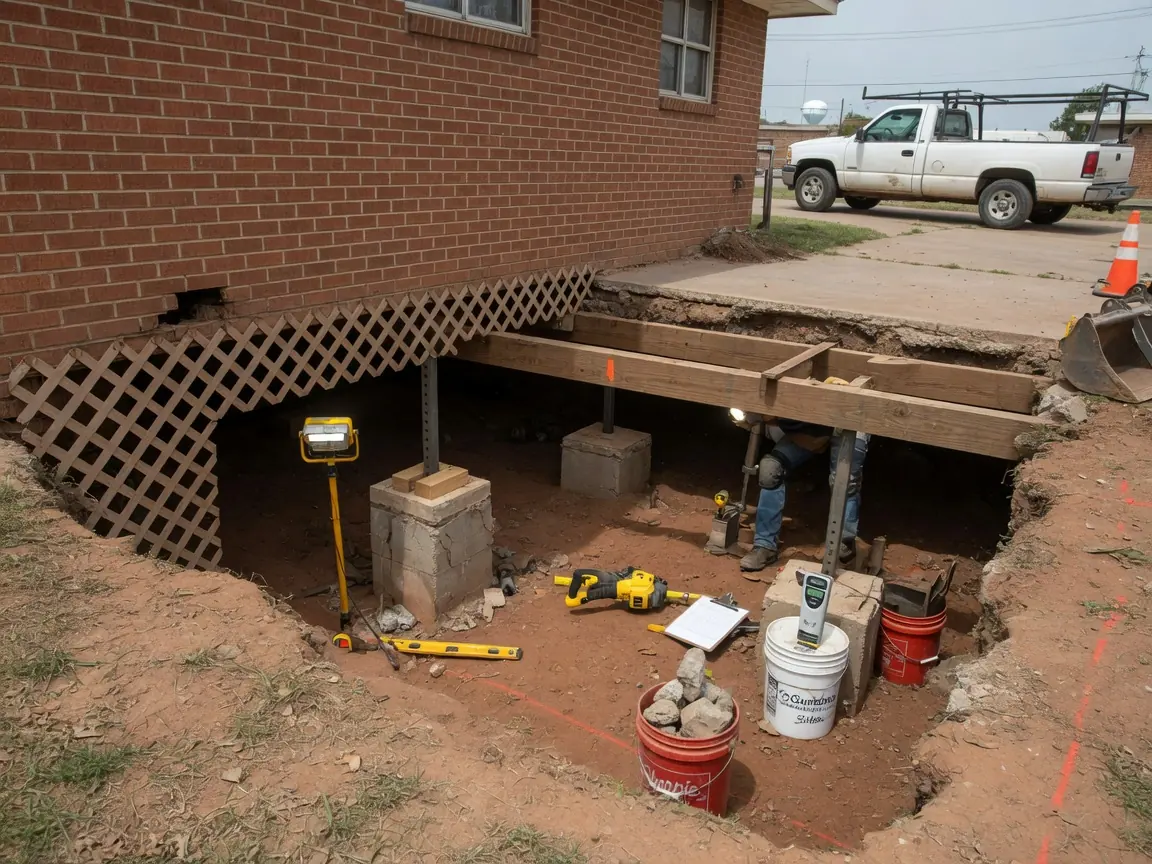
Why Is Oklahoma Soil Red, and What Does It Mean for Your Crawl Space?

Why the Dirt Is Red
Much of Oklahoma's red soil gets its color from iron oxides, essentially rust, coating the soil particles. The parent rocks across central Oklahoma, including red sandstones and shales laid down hundreds of millions of years ago, are rich in iron, and as they weathered they left soils stained in shades of red and orange.
Why Red Clay Moves
Many central Oklahoma soils contain a high share of clay, and some clays are expansive: they absorb water and swell, then shrink and crack as they dry. A wet spring followed by a hot, dry August can move the soil under a foundation up and down by noticeable amounts, and that movement is rarely even across the whole house.
What That Means for Your Crawl Space
- Piers on small footings rise and settle unevenly
- Floors slope and doors stick or swing
- Wet clay holds water against foundation walls
- Damp soil raises humidity in vented crawl spaces
- Shims between piers and beams crush over time
- Gaps open between floors and walls
How to Reduce the Movement
Keep soil moisture as steady as you can. Gutters and downspout extensions keep storm water away from the foundation, grading sends water away from the house, and in long droughts, soaker hoses a foot or two from the foundation can keep clay from shrinking too much. A sealed vapor barrier keeps soil moisture from rising into the crawl space air.
When to Call
If floors are sloping, doors are sticking or you see gaps between floors and walls, have the piers and beams checked. Most pier and beam homes can be leveled from the crawl space. See pier and beam foundation repair or Gaps Between Your Floor and Wall.
Want a free quote?
Call (405) 400-1701 or use the form for a free inspection and written quote.